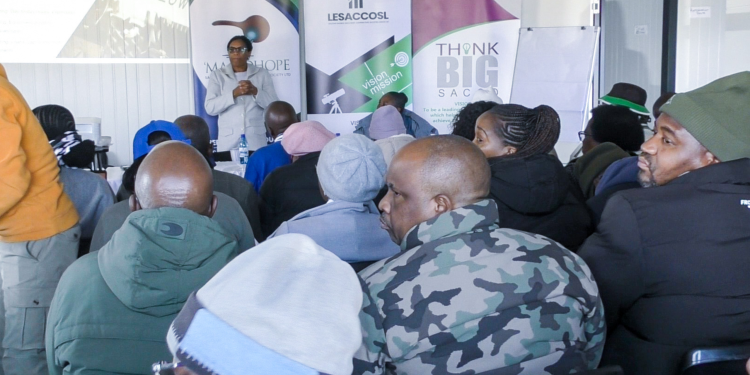
As part of the Business Month celebrations, Leseli Financial Literacy Institute
delivered a practical workshop focused on strengthening the financial foundations of
small businesses in Lesotho. The session brought together real business
experiences, relatable examples, and simple tools to help entrepreneurs make better
financial decisions in uncertain environments
Understanding Cash Flow: The Lifeline of Any Business
The workshop began by unpacking one of the most misunderstood business
concepts cash flow. Participants explored the difference between profit and cash
flow, learning that even profitable businesses can fail when cash flow is poorly
managed.
Using local examples, including small informal businesses, the discussion
highlighted:
The difference between operating, investing, and financing cash flows
a. Common mistakes such as mixing personal and business funds
b. The risks of overtrading, taking large orders without enough cash to deliver
c. Participants were encouraged to track cash regularly, separate finances, and
plan ahead to avoid unnecessary crises.
Investment Planning for Small Businesses
The session then shifted to investment basics, helping participants understand how
businesses can grow sustainably. Topics included:
- What investment means in a business context
- The relationship between risk and return
- How to start investing even with limited resources
Local investment opportunities were discussed, including treasury instruments, bank
and insurance products, equity investments, and reinvesting in one’s own business.
The focus was on informed decision-making rather than quick gains.
Managing Business Risks in a Challenging Environment
Recognising the realities faced by MSMEs in Lesotho, the workshop addressed
business risk and resilience. Participants examined common risks such as:
- Weather-related disasters
- Cash flow delays
- Theft and security challenges
- Power outages and infrastructure disruptions
Practical risk management steps were introduced, including risk identification, rating
likelihood and impact, and developing mitigation plans. The message was clear:
prepared businesses recover faster and protect jobs and livelihoods.
Debt Management for Business and Personal Stability
Debt management formed a critical part of the discussion. Participants reflected on
how debt affects not only finances, but also peace of mind and relationships. The
workshop covered:
- Good versus bad debt
- Warning signs of debt distress
- Practical repayment strategies such as the snowball and avalanche methods
Emphasis was placed on budgeting, saving for emergencies, and resisting pressure-
driven borrowing.
Key Takeaway
The workshop reinforced that strong businesses are built on clarity, discipline, and
planning. Financial literacy empowers entrepreneurs to manage cash wisely, invest
with purpose, handle risks proactively, and use debt responsibly.
- Watch the event video to see these discussions come to life and learn how
Leseli Financial Literacy supports business owners in building resilient
and sustainable enterprises.